Technology Journey Essay II (CIT 602)
Questions addressed in this essay:
As I reflect on my learning and growth throughout CIT 602, I recognize how my perspective on teaching, technology, and computational thinking has evolved.
Before the course, I identified as a digitally capable educator due to my lifelong exposure to technology and consistent use of digital platforms for instruction. However, this course expanded my skills in ways that reshaped how I use technology, design learning, solve instructional challenges, and understand my professional identity within a hybrid, technology-based educational landscape.
This next chapter in my technology journey highlights the shifts in my knowledge, confidence, and instructional design practices as I prepare to teach as a truly digital being.
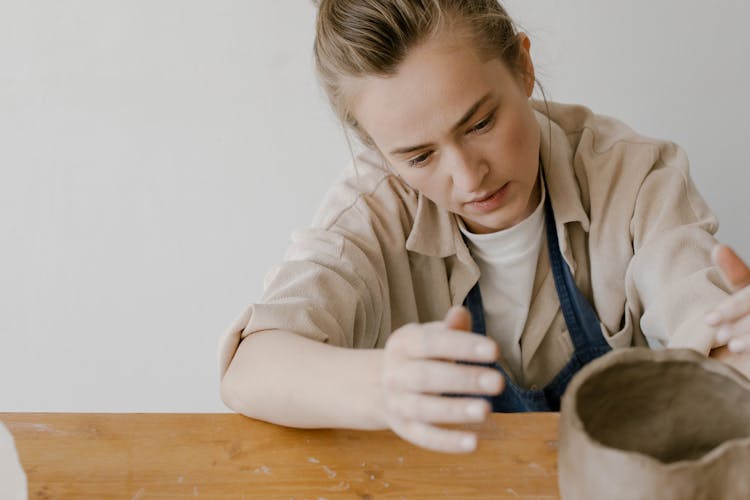
One of the most meaningful changes I experienced through this course is a noticeable increase in confidence with integrating technology intentionally. Prior to this semester, I used digital platforms such as Canvas, Infinite Campus, Adobe programs, smart boards, and various AI tools primarily for communication, media preparation, and organization. However, CIT 602 pushed me to think deeply about how technology supports learning, inclusivity, and student engagement.
By learning structured approaches to instructional design, especially design tasks that incorporate computational thinking elements such as abstraction, decomposition, algorithms, and pattern recognition, I developed a sense of how to scaffold complex creative work in my ceramics classroom.
The Styrogami case study was particularly impactful; it demonstrated that algorithmic thinking is not limited to coding, but embedded in artistic processes. Artists deconstruct, sequence, revise, and communicate creative steps; mirroring the logic of computation.
Therefore, CT in art is not a foreign skill, but a framework that strengthens creativity, discipline, and problem-solving.
New Perspectives on Computer Science Education

Realization
As a ceramics teacher, I realized that integrating CS is less about coding and more about cultivating habits of mind: structured problem-solving, sequencing, documenting artistic processes, breaking down complex forms, and iterating based on feedback.
These habits already exist in the art room; this course gave me a framework to elevate them.
New Perspective
My perspective on PreK, 12 computer science education has also changed.
I generally saw CS as a distinct subject from the arts, despite understanding its importance in broader digital literacy.
The integration-focused approach in CIT 602 shifted this.
I now understand that computer science can, and should, cut across disciplines through computational thinking, inclusive design, and technology-supported learning.
The ISTE Standards for Educators reinforce this by emphasizing creativity, knowledge construction, responsible digital citizenship, and the use of technology to design learner-centered experiences.
This aligns with my role as an art teacher in a Title I, culturally diverse high school.
Three critical issues stood out to me:
Ethical and Responsible Use of AI
Students often treat AI as a shortcut rather than a support tool.
Learning to design assignments that require original thinking while incorporating AI ethically is an ongoing challenge.
Digital Equity in Title I Schools
My students have varied access to devices, stable internet, and digital literacy skills.
Designing inclusively requires recognizing this variability as a core planning variable, not an afterthought.
Instructional Design as a Professional Skill
Technology is only as effective as the pedagogy behind it.
The class assignments revealed that teachers must be designers, not just tool users.

Some of the most enjoyable learning experiences in this course came from assignments that merged creativity, technology, and computational thinking.
The Styrogami computational thinking art case, again, stood out because it helped me see how naturally algorithmic processes exist in the visual arts. Breaking down artistic steps into clear, repeatable sequences gave me a new way to think about how my ceramics students plan and execute their work; a big "aha moment" of the course.
Some course activities were more of a challenge, in particular, the FigJam project. While I am comfortable with many digital tools, FigJam requires thinking visually, and computationally in a slightly different way. But, once I understood the logic of the structures, I found FigJam could support clarity in lesson planning in ways traditional documents don't.
Although this course was not heavily peer-interactive, the design thinking elements reminded me of the professional learning communities I participate in through CCSD, especially the annual Fine Arts PD at Del Sol High School and our weekly Fine & Performing Arts PLC at Western High School. These communities reinforce the same lesson emphasized in this course: instructional design becomes stronger when we examine practice thoughtfully through multiple lenses.
A big "aha moment" came from the realization that computational thinking is not inherently technological; it is cognitive. The moment I recognized how seamlessly CT principles integrate into clay-building processes; wedging, slab construction, and procedural sequencing, I saw new instructional possibilities for my classroom.
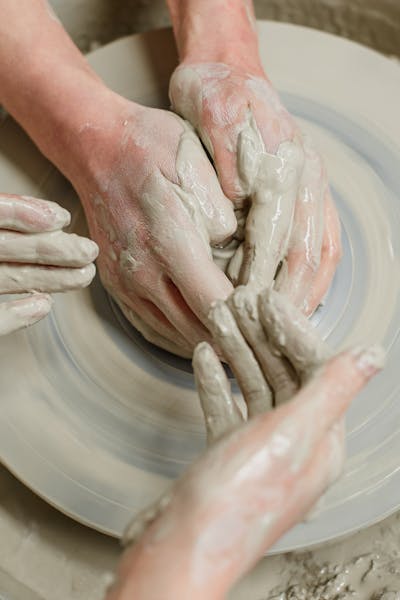
Another meaningful gain came from the module on designing diversity as a variable for inclusive learning environments.
This aligned with my reality teaching in a Title I, multilingual school and got me thinking intentionally about cultural responsiveness, access to technology, and differentiated support in inclusive lesson design.
Seeing how CT concepts can support language learners, especially when they break down processes, vocabulary, and artistic steps for my Title I students can help me design lessons with flexibility, representation, and accessibility.
This aligns with UDL principles and the equity focus in the ISTE Standards.
A reading that meaningfully shaped my understanding of computational thinking was "5 Ways to Teach Computational Thinking in the Classroom."
The article emphasizes that computational thinking is not a niche skill reserved for coders, but a foundational problem-solving approach grounded in decomposition, pattern recognition, abstraction, and algorithm design.
Educators Hannah Pals and Jennifer Jensen, explained that children naturally engage in computational thinking through play; breaking things apart, noticing patterns, simplifying processes, and experimenting to see what works.
They argue that when teachers structure and extend these innate behaviors, learning becomes "powerful and authentic" and applicable across all subject areas.
This directly parallels what I see in the ceramics studio every day. When students build, they are decomposing problems, recognizing patterns, and following an algorithm.
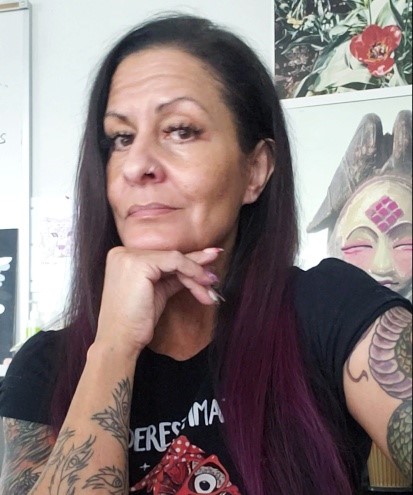
This course helped me recognize that my identity extends beyond "being digital." I have grown into a teacher-as-problem-solver, teacher-as-instructional-designer, and teacher-as-community-builder in a hybrid learning environment.

Using computational thinking, I now analyze instructional challenges more strategically; breaking down barriers, identifying patterns, evaluating student needs, and designing solutions.

Assignments such as the CT-infused case analysis and FigJam prototype strengthened my ability to create structured, intentional, inclusive digital learning experiences. I now design lessons with purpose, flow, and accessibility at the forefront.

Learning from peers in CIT 602 discussions mirrored the collaborative learning culture I value in CCSD's arts PLCs. Additionally, as I plan possible future involvement in organizations such as ISTE and the National Art Education Association Convention, I see professional communities as essential to sustaining growth as a digital educator.
Who I Am
As A Digital Being In A Hybrid Learning Community
In this hybrid world of clay, creativity, and technology, I define myself as a digital being who:
- embraces emerging technology without sacrificing authenticity
- uses computational thinking to deepen artistic practice
- prioritizes equity and access for diverse learners
- engages in ongoing professional learning communities
- fosters student agency in both physical and virtual spaces
Looking forward, I see myself incorporating a range of technologies that extend and enhance the hands-on work of ceramics. Tools such as Canva can help students access learning by showing clear sequencing for projects; as well as AI-supported tools (within CCSD guidelines) to provide multilingual scaffolds, step-by-step modeling, design prompts, and personalized vocabulary supports for ELL and neurodiverse learners.
Platforms such as Google Gemini, FigJam, and adaptive Canvas modules will allow me to build interactive lessons where students can rehearse techniques digitally before applying them to clay. Each of these technologies enhances access, creativity, and differentiation without erasing the authenticity of hands-on artmaking.
I see a classroom where learning occurs through hands-on exploration supported by technology, creating a hybrid ecosystem that mirrors the real world they will enter.
This blended approach strengthens both artistic thinking and 21st-century digital literacy, empowering students to thrive as makers, thinkers, and digital citizens.
This chapter of my technology journey reflects not only an increase in technological skill, but a transformation in how I view myself as a teacher in an evolving digital landscape. Through CIT 602, I strengthened my confidence, expanded my instructional design capabilities, deepened my understanding of computational thinking, and embraced inclusivity as a central design variable where technology is an integral partner in student learning.